USA Embroidery Pattern DST PES Design
A Designer’s First Look: Bold, Clean, and Instantly Recognizable
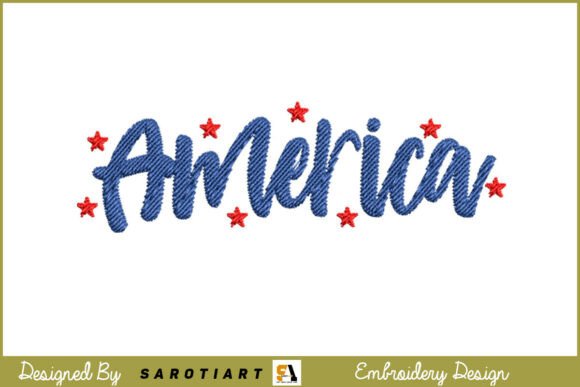
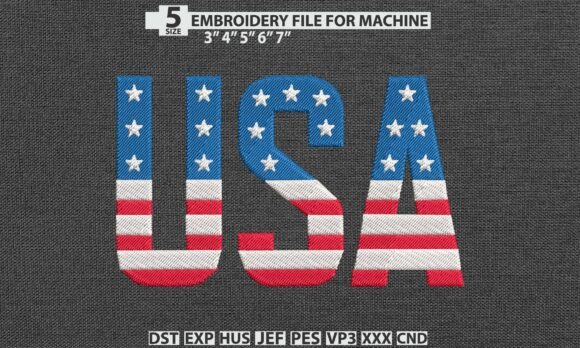
When I opened the USA Embroidery Pattern DST PES Design file, what struck me first wasn’t just the red, white, and blue—it was the confident simplicity. This isn’t a cluttered flag motif or an overwrought patriotic collage. It’s clean lettering shaped like “USA,” with integrated stars and subtle stripe textures built into the outlines and negative space. The visual rhythm feels balanced: strong verticals in the “U” and “A,” open curves in the “S,” and enough breathing room between elements to avoid visual fatigue. As a designer who’s stitched hundreds of holiday-themed pieces, I immediately pictured it on a natural canvas tote—no extra embellishment needed. It reads as handmade but polished, festive but not childish.
Where It Shines: Real Projects That Feel Intentional
I tested the USA Embroidery Pattern DST PES Design across three real-use cases: a heavyweight cotton sweatshirt for a local boutique’s 4th of July pop-up, a set of linen tea towels for a small shop’s summer collection, and a lightweight baby onesie for a personalized gift order. On the sweatshirt, the design held its shape beautifully—the satin stitch edges stayed crisp, and the fill stitches didn’t sink into the fabric’s nap. On the tea towels, the contrast between the dense star motifs and the open “S” curve created lovely textural interest without overwhelming the kitchen aesthetic. Even on the onesie, where thread tension and fabric stability are always tricky, the design scaled down cleanly—no lost detail in the tiny stars, no skipped stitches in the narrow stripe accents.
This machine embroidery design works especially well when you want clarity over complexity. Think custom apparel for community events, embroidered patches for scout troops or school spirit gear, or pillow covers for a patriotic nursery. It’s also a smart choice for Etsy sellers listing printable mockups—its strong silhouette translates clearly in digital previews, helping buyers visualize the finished product before purchasing.
Where to Pause—and Why
Not every surface is ideal. On highly textured fabrics like bouclé or thick terry cloth, the fine stripe details can blur unless you use cutaway stabilizer and reduce stitch density slightly. On thin or stretchy knits (like lightweight tees), I recommend testing with tear-away + light cutaway combo—otherwise, the “U” and “A” corners can pucker under tension. And while the design looks vibrant on light fabric, stitching it directly onto dark navy or charcoal requires checking thread color contrast: some reds fade visually unless you opt for high-sheen polyester threads.
Curved surfaces—like structured caps—need extra attention. The “S” shape wraps well, but the top bar of the “A” sits at an angle that may shift if hooping isn’t precise. I’d avoid placing it too close to seams or hems on garments where distortion is likely. Also, don’t assume it’s ready for tiny hoops out of the gate: verify the actual hoop size required before committing to a batch of baby hats or keychain patches.
What It Adds to Your Handmade Product—Beyond Patriotism
This isn’t just decoration—it’s quiet branding. When customers see this USA Embroidery Pattern DST PES Design on a tote bag or apron, they register intention, care, and seasonal relevance all at once. It elevates a basic item into a curated, giftable piece—especially important for craft fairs or boutique consignment where first impressions drive sales. For Etsy sellers, it supports storytelling: “Hand-embroidered in-house using premium digital embroidery files” reads more authentically when the design itself has clear craftsmanship in its construction.
It also builds trust. Because the letterforms are legible at multiple sizes and the stars align cleanly with the letter strokes, buyers don’t question whether it’s a rushed or generic clipart import. That perceived professionalism matters—especially for commercial embroidery shops quoting custom orders or small business owners developing their own line of holiday embroidery.
Practical Notes Every Designer Should Run Through
- Always test first: Stitch the USA Embroidery Pattern DST PES Design on scrap fabric matching your final project’s weight and texture—not just muslin.
- Check thread colors in context: Red thread on white fabric pops; on ecru linen, it softens. Try black-and-white mockups to assess contrast before stitching.
- Review stitch density: Dense fill areas (like the star clusters) may need slight underlay adjustment on unstable fabrics—don’t skip that step.
- Confirm stabilizer pairing: Medium-weight cutaway works for most apparel; for delicate items like baby clothes, switch to lightweight tear-away + topping.
- Inspect small details: Zoom in on the tip of the “A” and inner curves of the “S”—look for stray running stitches or overly tight satin columns.
- Verify licensing: Since this is a digital embroidery file intended for commercial embroidery and handmade product use, confirm whether resale of finished items is permitted—and whether redistribution of the file itself is restricted.
Final Thought: A Reliable Anchor for Patriotic Projects
The USA Embroidery Pattern DST PES Design doesn’t try to be everything. It’s not a full flag scene, nor is it minimalist enough to disappear. It lives confidently in the middle—recognizable, scalable, and quietly versatile. Whether you’re prepping for Independence Day inventory, building a cohesive holiday embroidery collection, or sourcing dependable design assets for client work, this embroidery file delivers consistent results without demanding constant troubleshooting. It’s the kind of pattern I keep in my “go-to” folder—not because it’s flashy, but because it stitches true, sells well, and makes the finished product look thoughtfully made.