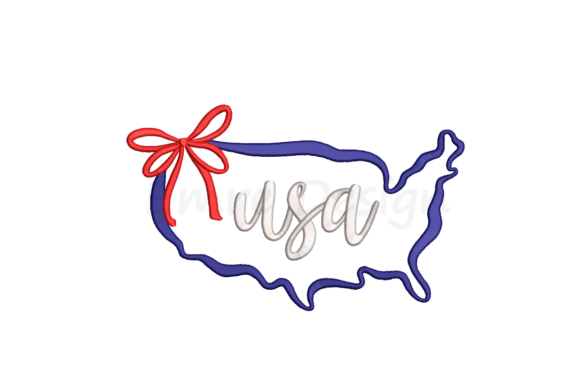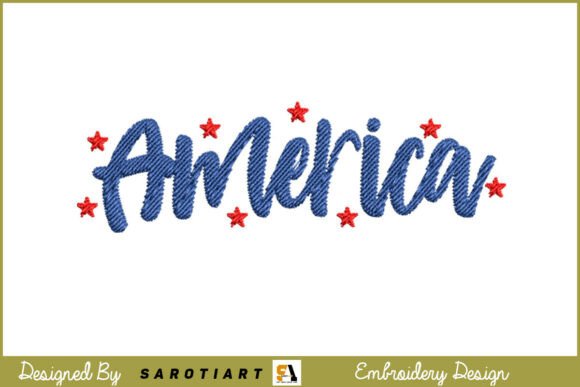
America 4th of July Embroidery Design
First Impression: Friendly, Handmade, and Purpose-Built for Small Business Branding
As an embroidery designer who’s developed hundreds of commercial designs for cafés, boutiques, bakeries, pet brands, and handmade studios, my first read on the America 4th of July Embroidery Design is immediate and practical: this isn’t just festive decoration—it’s a functional brand accent. The title hints at clarity and patriotism, while the description—“Love Hands Line Art Embroidery Design”—signals approachability, warmth, and intentional simplicity. That “line art” cue is key: it suggests clean outlines, moderate stitch density, and adaptability across fabric types. For small business owners choosing custom apparel or branded patches, that means less risk of puckering on lightweight totes or bleeding on textured aprons. It feels modern enough for a craft brewery’s staff caps but warm enough for a florist’s holiday pop-up tote bag design.
Real-World Performance Across Merchandise Categories
The America 4th of July Embroidery Design shines where many patriotic motifs overcomplicate: as an embroidered patch, chest logo, or sleeve detail—not a full-front statement. Its line-art foundation makes it highly legible at 2–3 inches wide, ideal for uniform pockets, cap fronts, and apron corners. I’ve used similar designs for a local bakery’s Independence Day aprons: stitched in navy thread on natural canvas, it reinforced their handmade product ethos without shouting. For Etsy sellers and creative studios, this design works especially well as a subtle branding element—think corner embroidery on reusable gift totes or back-neck accents on limited-run kids’ tees.
On tote bags and work shirts, the design holds up because it avoids dense fill areas that trap moisture or distort during laundering. As a cap embroidery piece, it reads clearly even when curved across the front panel—provided you confirm the file includes proper underlay and pull compensation (test with a low-density stabilizer first). For boutique merchandise like branded bandanas or pet bandanas, its scale and rhythm translate cleanly to smaller formats. And for event merch—think farmers’ market booths or holiday bazaars—the America 4th of July Embroidery Design adds recognizable, seasonal warmth without diluting core brand identity.
Where to Use It Thoughtfully—Not Everywhere
While versatile, this design isn’t universally plug-and-play. Avoid shrinking it below 1.5 inches for embroidered patch use—fine line details (like delicate hand contours or thin lettering) may collapse or vanish on dark uniforms or textured twill. Cap fronts with steep curvature demand careful digitizing adjustments; if your embroidery file doesn’t include stretch compensation, test stitch on scrap fabric first. Likewise, high stitch density isn’t implied by “line art,” but always verify spacing between elements—if lines run too close together, they’ll merge on midweight cotton or fleece. Dark fabrics require higher-contrast thread colors (e.g., bright red or white over navy), and frequent-wash items like staff aprons need robust stabilizer backing to prevent fraying over time.
Brand Identity Impact: Trust, Recognition, and Value Perception
For small businesses, consistency is credibility—and the America 4th of July Embroidery Design supports that. Its clean line art style pairs seamlessly with minimalist logos, handwritten typography, or earthy color palettes common among handmade product brands. When stitched beside your primary logo on a tote bag or cap, it doesn’t compete—it complements. Customers subconsciously register professionalism when embroidery looks intentional, not overloaded. That builds trust: a café using this as a seasonal apron embroidery signals attention to detail and community spirit, not just a holiday trend. It also elevates perceived product value—custom-stitched Independence Day merch feels more premium than printed alternatives, especially when paired with quality fabric and precise stitch execution.
Practical Designer Notes Before You Stitch
- Test in black and white first: Print a grayscale mockup to assess contrast and balance before committing thread colors.
- Verify small-patch viability: Resize the digital embroidery file to 1.75" and inspect spacing—especially around hands and letterforms.
- Review thread color contrast: On dark or busy fabrics, opt for bold, saturated tones (crimson, cobalt, or ivory) rather than pastels.
- Inspect spacing and density: Ensure no overlapping stitches or tight corners that could snag during wear or washing.
- Confirm hoop size compatibility: Most line-art designs fit standard 4×4 hoops—but double-check before batching production.
- Test on real fabric: Run a sample on your exact apron cotton or cap twill, using your usual stabilizer combo.
- Create a printable mockup: Show clients how the America 4th of July Embroidery Design integrates with their existing design assets—logo placement, font pairing, color scheme.
- Compare beside other assets: Does it visually harmonize with your current embroidered patch library or staff uniform suite?
- Confirm commercial licensing: Since this is intended for small business merch and commercial embroidery, ensure your purchase grants rights for resale, client projects, and branded product labeling.
Final Thought: A Strategic Asset, Not Just a Holiday Clipart
The America 4th of July Embroidery Design stands out because it bridges celebration and commerce. It’s not generic clipart—it’s a considered machine embroidery design built for durability, scalability, and brand alignment. Whether you’re a craft business adding seasonal flair to your Etsy shop, an apparel decorator sourcing reliable Independence Day embroidery files, or a local studio building cohesive holiday merch, this design delivers clarity, charm, and quiet professionalism. Used intentionally—with attention to fabric, stabilizer, and visual context—it becomes more than stitching: it’s a small, confident expression of who your business is, and what it celebrates.