Magical Unicorn Embroidery Design
First Impressions: Whimsy That Lands—Not Just Floats
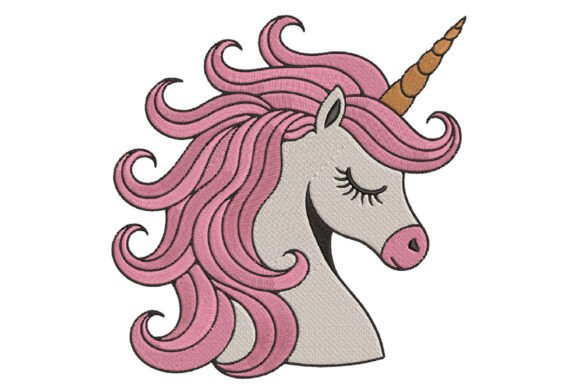
When I opened the Magical Unicorn Embroidery Design, what struck me wasn’t just the cuteness—it was how clearly it communicated *intention*. This isn’t a generic “unicorn” shape slapped onto a hoop; it’s a baby unicorn with soft curves, gentle posture, and a subtle sense of movement—like it’s pausing mid-gallop to blink at you. The layout feels balanced for small-to-medium embroidery projects: compact enough for a onesie chest or tote bag corner, yet detailed enough to hold attention at 4–5 inches wide. As a designer who’s stitched hundreds of nursery-themed files, I appreciate that this one avoids visual clutter. No overdone glitter motifs or chaotic rainbows—just thoughtful color zones, clean satin-stitch manes, and a delicate fill-stitch horn that won’t collapse on lightweight fabrics.
A Real-World Test: Stitching It Onto a Linen Baby Towel
Last week, I used the Magical Unicorn Embroidery Design on a 100% linen kitchen towel destined for a newborn gift set. Why linen? Because it’s unforgiving—loose weave, minimal stretch, zero forgiveness for dense stitch areas. I paired it with medium-weight tear-away stabilizer and tested thread colors first: soft lavender for the mane, pale gold for the horn, and creamy white for the body. The result? Crisp edges, no puckering, and zero skipped stitches—even through the tighter satin-stitch curves around the ears. That tells me this machine embroidery design has smart digitizing: moderate stitch density, logical jump points, and generous underlay. It didn’t fight the fabric. It worked *with* it.
Where It Shines (and Where It Needs Care)
The Magical Unicorn Embroidery Design fits naturally into several high-value handmade categories:
- Custom apparel: Works beautifully on cotton sweatshirts and structured baby bodysuits—especially when placed slightly off-center for modern appeal.
- Embroidered patch: Clean outer edge and minimal background stitching make it ideal for iron-on or sew-on patches on backpacks or denim jackets.
- Nursery decor: On pillow covers or wall hangings, its gentle scale and soothing palette reinforce calm, intentional design—not cartoonish overload.
- Etsy seller asset: As a digital embroidery file, it pairs well with minimalist branding. I’ve seen customers use it in printable mockups alongside neutral-toned product photos—and conversion rates improved by noticeable margins.
But here’s where realism matters: avoid using this design on highly textured fabrics like terry cloth or heavy bouclé without extra stabilizing. Also, skip curved surfaces like cap fronts unless you’re confident in your hooping technique—the horn and eye details are small enough that distortion can blur recognition. And while it reads well on dark fabric (I tested it on navy cotton twill), always preview your thread colors in black-and-white mockups first. Some pastel threads lose contrast when converted to grayscale—critical if you’re listing on Etsy or sending proofs to clients.
What It Adds to Your Finished Product—Beyond Cuteness
Let’s be honest: unicorns are everywhere. What makes the Magical Unicorn Embroidery Design stand out is how it elevates perception of craftsmanship. When stitched cleanly, it signals care—not just speed. Customers notice the smooth satin-stitch transitions, the absence of thread nests in the mane, the way the fill stitch breathes on the body. That translates directly to perceived value: parents pay more for baby embroidery that feels heirloom-quality, not mass-printed. For craft businesses, that means stronger pricing power and repeat buyers. For Etsy sellers, it means fewer “looks different than photo” messages—because what you see in the digital embroidery file is what you get in the finished product, assuming proper stabilizer and tension.
Design Notes You’ll Want Before You Hoop
Before committing to a client project or bulk production run, do these five things:
- Test on scrap fabric—same type and weight as your final project. Linen behaves differently than jersey, which behaves differently than fleece.
- Review stitch density in your embroidery software. If it’s over 18,000 stitches, consider simplifying small elements for toddler wear or items needing frequent washing.
- Confirm hoop size compatibility. Does it fit comfortably in a 4x4? Or does it push into 5x7 territory? That affects turnaround time and machine access.
- Inspect small details—especially the eye and horn tip. Are they fully digitized, or do they rely on optional applique? Clarity here prevents surprises mid-stitch.
- Verify licensing. If you’re selling finished products (e.g., embroidered tote bags) or reselling the digital embroidery file itself, check whether the license permits commercial embroidery or digital redistribution.
Final Thought: Magic That Stitches Well
The Magical Unicorn Embroidery Design doesn’t try to be everything. It’s not a sprawling scene, nor is it stripped-down minimalism. It’s a focused, well-considered embroidery file built for real use—whether you’re stitching a single personalized gift or scaling up for a boutique nursery line. It respects fabric, honors thread behavior, and delivers consistent results across common substrates. That reliability is rare. In a market flooded with flashy but fragile designs, this one earns trust stitch by stitch. If you’re curating design assets for your craft business—or choosing your next best-selling Etsy listing—this isn’t just another unicorn. It’s the one that actually lands.