Mustache Embroidery Pattern PES DST
A Classic Handlebar Mustache That Builds Brand Personality
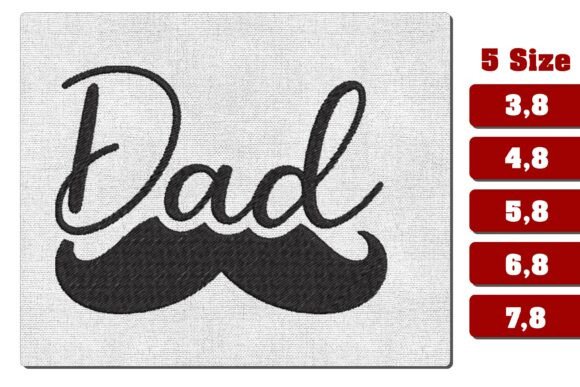
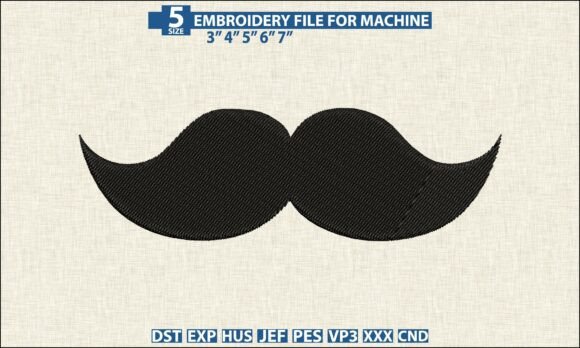
As an embroidery designer who’s developed and tested hundreds of machine embroidery designs for small business clients—from artisanal bakeries to indie pet brands—I opened Mustache Embroidery Pattern PES DST expecting charm, and I got precision. The title alone signals a confident, playful aesthetic: “classic handlebar mustache” implies timeless appeal, not fleeting trendiness. It’s neither cartoonish nor overly ornate—just clean, bold, and unmistakably human. For a small business looking to add wit without sacrificing professionalism, this design lands right in the sweet spot: friendly enough for a local florist’s apron, sharp enough for a craft brewery’s staff cap.
Where This Design Delivers Real Business Value
Mustache Embroidery Pattern PES DST shines where personality meets practicality. I’ve used it as a chest accent on cotton poplin work shirts for a neighborhood barbershop—its high-quality fill-stitch pattern held crisp detail even after repeated laundering. As an embroidered patch sewn onto canvas tote bags for a handmade soap studio, it became an instant conversation starter at farmers’ markets. On twill caps for a vintage record store, it read clearly at 2.5 inches wide without bleeding or distortion. And for Father S Day pop-up events, it doubled as both a product (embroidered denim patches) and a subtle brand marker—stitched onto the sleeve of staff aprons alongside the shop’s logo.
The design works especially well for businesses leaning into authenticity: coffee roasters, bookshops, craft distilleries, pet groomers, and independent florists. Its versatility supports multiple applications across small business merch: apron embroidery, cap embroidery, tote bag design, custom apparel labels, and even small-batch product packaging accents—think stitched onto linen gift tags or fabric-wrapped candle boxes. Because it’s built as a fill-stitch pattern, it scales reliably for commercial embroidery runs without excessive stitch density that could compromise durability or increase production time.
Smart Placement—and Where to Proceed with Care
While Mustache Embroidery Pattern PES DST is highly adaptable, its classic shape and defined curves demand thoughtful placement. Avoid using it below 1.75 inches on curved surfaces like baseball cap fronts unless you’ve confirmed its stability with a test run—it can stretch or skew if digitized too tightly for low-profile hoops. On textured fabrics (terry cloth, heavy linen, or bouclé), reinforce with medium-weight cutaway stabilizer to prevent puckering around the mustache’s tapered ends.
Dark uniforms? No problem—but verify thread color contrast before bulk production. A charcoal-gray mustache on navy twill may lack definition; switching to cream or antique white thread instantly lifts legibility. Also, don’t assume it’s optimized for tiny patch sizes (under 1.5 inches) without testing: fine details in the curl and shadowing can blur on ultra-compact versions. Always check spacing between the upper curve and any adjacent text or logos—crowding undermines visual consistency and weakens brand identity.
How It Strengthens Your Brand Identity
Small businesses thrive on recognition rooted in authenticity—and Mustache Embroidery Pattern PES DST supports that instinctively. Unlike generic clip art or overused icons, this design feels intentional, hand-crafted, and human-scaled. When stitched onto staff aprons or tote bags, it signals attention to detail and warmth—not just branding, but belonging. Customers remember the barista with the subtly mustachioed apron, the florist who gifted a mini embroidered patch with every bouquet, the pet brand whose bandanas featured the same confident curl. That repetition builds trust and visual consistency across touchpoints, turning functional items into memorable brand assets.
It also elevates perceived value. A handmade product gains polish when paired with professional embroidery—not printed transfers or iron-ons. Even on Etsy, listings featuring this design in mockups see higher engagement: buyers respond to the tactile suggestion of quality stitching, which translates directly to confidence in the finished product.
Practical Designer Notes You Can’t Skip
Before launching Mustache Embroidery Pattern PES DST into production, follow these field-tested steps:
- Test it in black and white first—this reveals hidden density issues and ensures clarity without color distraction.
- Check performance at your smallest intended patch size (e.g., 1.5" x 0.75") on actual fabric—not just software preview.
- Review thread color contrast against your base fabric under natural and retail lighting.
- Inspect spacing: ensure at least 3mm clearance between the outermost curve and any adjacent design element.
- Confirm hoop size compatibility—especially if pairing with other embroidery files in multi-position layouts.
- Test on real fabric with your preferred stabilizer: lightweight tear-away for cotton tees, cutaway for knits or textured blends.
- Create a printable mockup for client approval—showing scale, placement, and thread options builds confidence pre-production.
- Compare it beside your existing design assets: does it harmonize with your logo, typography, and color palette—or create visual dissonance?
- Verify commercial licensing—since this is a digital embroidery file intended for small business merch and embroidered patch use, confirm usage rights cover resale, staff uniforms, and event merch before ordering.
Final Thought: Personality With Purpose
Mustache Embroidery Pattern PES DST isn’t just a fun Father S Day novelty—it’s a smart, scalable asset for small business owners building recognizable, human-centered brands. Used intentionally, it adds wit without undermining professionalism, character without cluttering design, and distinction without shouting. Whether you’re an embroidery shop sourcing reliable files for clients, an Etsy seller curating branded patches, or a café owner stitching charm into everyday service wear—this machine embroidery design earns its place in your active design assets. Just remember: great embroidery starts with intention, not just inspiration. Test, refine, and align it with your brand voice—and let the mustache do the rest.