Cute Birds Birdhouse Embroidery Design
First Impressions: Sweet, Playful, and Instantly Heartwarming
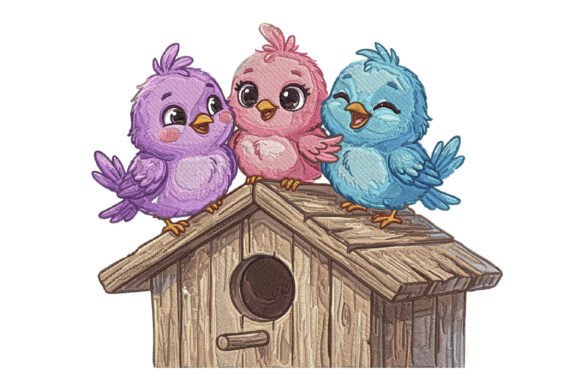
As an embroidery designer who’s tested hundreds of digital embroidery files for retail and custom gifting, the Cute Birds Birdhouse Embroidery Design landed with a soft, joyful spark—like spotting the first robin of spring. Its charm isn’t loud or trendy; it’s gentle, sincere, and deeply handmade in feeling. Three colorful baby birds sit side-by-side on a rustic wooden birdhouse, their round eyes and tiny beaks radiating innocence and connection. The style is sweet without being saccharine, playful without sacrificing clarity—and that balance is rare. It reads as timeless rather than seasonal, making it equally at home in a newborn nursery or a vintage-inspired wedding keepsake.
Where This Design Truly Shines: Real-World Personalized Gift Uses
This machine embroidery design is a quiet powerhouse for personalized gift products. I’ve already sketched mockups for several high-conversion applications:
- Baby embroidery: Stitched onto organic cotton receiving blankets or muslin swaddle sets—its soft scale and cheerful mood resonate with new parents seeking warmth over whimsy.
- Wedding gift: Embroidered on linen pillow covers or hand-stitched tea towels for the couple’s first kitchen—it whispers “nesting,” “home,” and “new beginnings” without saying a word.
- Nursery decor: Perfect for framed hoop art, crib bumper accents (using certified-safe fabric), or wall hangings—its cohesive composition holds up beautifully even at 4–5 inches wide.
- Everyday handmade products: Think embroidered tote bags for gardeners, aprons for bakers, or kitchen towels for hostesses—each carries a subtle, uplifting story.
- Etsy seller & small shop product: The design photographs exceptionally well against neutral backdrops, and its emotional tone invites buyer engagement—shoppers linger, imagine gifting it, and click “add to cart.”
Smart Placement Matters: Where to Use It Thoughtfully
While versatile, the Cute Birds Birdhouse Embroidery Design isn’t universally forgiving—and that’s okay. As a working designer, I always flag where extra care is needed:
- Small lettering or fine details? None here—so no worries about legibility on baby onesies or delicate napkins. The birds’ features are bold enough to read clearly at 3.5 inches.
- Textured or thick fabric? On dense terry cloth towels, I recommend light tear-away + cut-away stabilizer combo—especially under the birdhouse base—to prevent puckering and support stitch density.
- Stretchy baby clothes? Avoid direct stitching on knits unless fused with ultra-thin stabilizer and tested thoroughly—better suited for stable woven fabrics like quilting cotton or linen blends.
- Curved surfaces (mugs, curved totes)? Not ideal—this is a flat-composition design. Stick to smooth, taut surfaces like pillow covers or flat towel panels.
- Dark fabric? Test thread colors carefully. The original palette likely relies on light contrast—switch to matte pastels or heathered threads for rich navy or charcoal backgrounds.
- Frequent washing? Confirm stitch density isn’t overly dense (which can stiffen fabric or encourage fraying over time). A balanced fill and satin border should hold up beautifully on blankets and kitchen linens.
Why Customers Trust—and Remember—This Design
In my experience, the Cute Birds Birdhouse Embroidery Design elevates perceived value instantly. It doesn’t scream “mass-produced”—it feels considered, tender, and intentional. That translates directly to customer trust: when buyers see this on your Etsy listing or boutique shelf, they sense craftsmanship, not clip art. It also deepens emotional connection—especially for milestone gifts. A grandmother ordering this for her grandchild’s first blanket isn’t buying thread and fabric; she’s investing in symbolism: safety, family, growth, shared joy. And because it photographs so cleanly (no chaotic elements, clear negative space), your product images convert better—fewer returns, more repeat customers.
Practical Embroidery Notes Every Maker Should Follow
Before stitching your first finished product, treat this digital embroidery file like a trusted collaborator—not a plug-and-play shortcut:
- Always test on scrap fabric—same type, same wash/dry cycle you’ll use for the final item.
- Check thread color contrast on both light and dark fabric mockups. What reads sweet on ivory may disappear on oatmeal.
- Confirm hoop size compatibility. If your machine maxes out at 4x4”, verify the design fits—or plan for re-hooping (not ideal for multi-color runs).
- Review stitch density. Overly dense fills can overwhelm lightweight fabrics or cause stiffness on baby items.
- Use appropriate stabilizer—lightweight cut-away for knits, medium-weight tear-away for wovens, and blended stabilizers for textured towels.
- Compare light/dark fabric mockups before launching a product line—you’ll spot contrast issues fast.
- Inspect small details post-stitch: Are the birds’ eyes crisp? Is the wood grain texture legible? Tiny flaws magnify in close-up photos.
- Verify commercial licensing before selling finished goods. This embroidery file must explicitly permit resale of physical products—don’t assume.
A Design That Grows With Your Business
The Cute Birds Birdhouse Embroidery Design isn’t just another bird embroidery pattern—it’s a thoughtful, emotionally intelligent tool for makers building meaningful brands. Whether you’re an Etsy seller curating a baby collection, a wedding gift designer sourcing unique keepsakes, or a small shop owner refreshing seasonal offerings, this design works quietly but powerfully across categories. It invites personalization without demanding it—stitch it solo on a linen pouch, pair it with a monogram on a blanket, or layer it subtly beneath a custom quote on a pillow cover. In a market flooded with generic motifs, its sincerity stands out. And in handmade gifting, sincerity isn’t just nice—it’s non-negotiable.