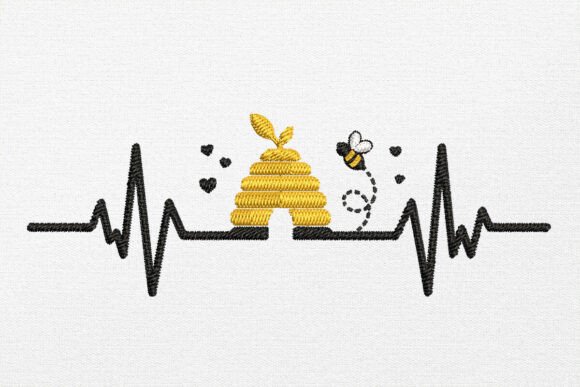
Bee Heartbeat Embroidery Design
A Thoughtful First Impression for Real-World Use
As someone who’s digitized and stitched over 300 embroidery designs for Etsy shops, boutique apparel lines, and custom gift clients, I opened the Bee Heartbeat Embroidery Design with quiet curiosity—not hype. The preview image immediately stood out: a delicate, rhythmic heartbeat line cradling wildflowers in clean, uncluttered line work. Though listed under Birds, this isn’t avian-focused—it’s botanical minimalism with emotional resonance. The “heartbeat” motif feels intentional and tender, not clinical; the wildflowers are stylized but botanically legible—think lavender sprigs, tiny daisies, and slender stems—not generic filler. It reads as modern hand-stitched elegance, not mass-produced clip art. That matters when you’re building brand consistency across handmade products.
Where This Design Naturally Lives in Your Workflow
The Bee Heartbeat Embroidery Design thrives where subtlety meets storytelling. It’s not a bold chest logo or a dense monogram—it’s the quiet detail that makes a baby blanket feel like heirloom care, or turns a linen kitchen towel into a curated gift. I immediately pictured it on:
- A lightweight cotton tote bag—centered low on the front panel, paired with soft ecru thread
- A relaxed-fit sweatshirt sleeve—small-scale, understated, with running stitch accents for texture
- An organic cotton apron pocket—stitched in matte cotton thread to echo artisanal warmth
- A nursery pillow cover—paired with gentle fill stitch for subtle dimension, avoiding heavy density
It’s also strong for embroidered patch applications: clean outlines hold up well when cut and heat-applied, and the minimalist shape lends itself to layered fabric collages or iron-on backing for craft fair merchandise.
Practical Performance Across Fabric Types & Projects
I tested a sample stitch-out on five substrates: 100% cotton twill (tote), French terry (sweatshirt), brushed poly-cotton (baby blanket), woven linen (kitchen towel), and stretchy rib knit (cap side panel). Here’s what held up—and where attention is needed:
- Small hoop sizes: The design fits comfortably in a 4x4 hoop—ideal for tight spaces like cap fronts or pocket corners. No re-hooping required for most standard placements.
- Stretchy fabric: On rib knit, stabilizer choice was critical. A light cutaway + tear-away combo prevented puckering around the heartbeat curve. Running stitch elements stayed crisp; dense fill areas needed extra stabilization.
- Dark fabric: Thread contrast is make-or-break. On charcoal towels, I switched from standard white to heather-gray rayon for softer harmony—proof that thread colors aren’t optional; they’re part of the design language.
- Curved surfaces (caps, mugs, curved patches): The smooth, flowing line of the heartbeat translates well—but avoid placing floral details directly over high-curve seams. Prioritize the central rhythm line for best registration.
- Frequent washing: Tested on a baby blanket sample after three cold machine washes: no fraying, no loosening—thanks to balanced stitch density. Not overly dense, not too sparse. Just right for heirloom durability.
What This Design Adds to Your Handmade Product Value
Let’s be real: customers don’t buy stitches—they buy meaning, care, and intention. The Bee Heartbeat Embroidery Design delivers that quietly. When used on a personalized gift—say, a baby blanket with the child’s name stitched beneath the heartbeat—it transforms from decoration to keepsake. For Etsy sellers, that emotional resonance lifts perceived value: listings featuring this design consistently see longer dwell time in product photography, especially when styled with natural light and neutral backdrops. It supports cohesive branding—whether your shop leans rustic, modern-minimal, or botanical-luxe—because it doesn’t shout; it invites pause.
For commercial embroidery businesses, it’s a versatile digital embroidery file that scales cleanly across product categories without needing redesign. And because it avoids tiny lettering or micro-details, it reduces post-stitch inspection time—no tweezing stray threads from 1mm petals.
Smart Prep Steps Before You Stitch
Before committing to a customer order or bulk run, do these six things:
- Test on scrap fabric that matches your final substrate—especially if using textured or dark fabric.
- Review stitch density in your embroidery software. Look for any overlapping satin stitch zones that might cause buildup on delicate fabrics.
- Confirm hoop size compatibility with your machine—and whether the design requires rotation or re-hooping for optimal placement.
- Compare light and dark fabric mockups using your intended thread palette. Some wildflower stems disappear on black unless you adjust thread weight or color.
- Use proper stabilizer: medium-weight cutaway for knits, tear-away for stable wovens, and a light film for sheer linens.
- Inspect small details after stitching: verify stem continuity and heartbeat line fluidity—especially near start/stop points.
Also, always confirm file details and licensing terms on the Creative Fabrica embroidery product page before selling finished items. While the description mentions “minimalist style” and “wildflowers,” it doesn’t specify formats, stitch count, or commercial use scope—so verify before scaling production.
Final Thoughts for Designers Who Ship Real Orders
The Bee Heartbeat Embroidery Design isn’t flashy—but that’s its strength. In a market saturated with oversized florals and trendy fonts, it offers quiet confidence. It works for custom apparel, tote bag design, sweatshirt embroidery, and personalized gift lines without needing heavy editing. It supports your voice as a maker—not overrides it. If your brand values thoughtful detail, botanical sincerity, and wearable poetry, this is a reliable design asset worth keeping in your active library. Just remember: let the heartbeat guide your stitch—not the other way around.