Teddy Bear with Balloons Embroidery
First Impression: Sweet, Festive, and Instantly Relatable
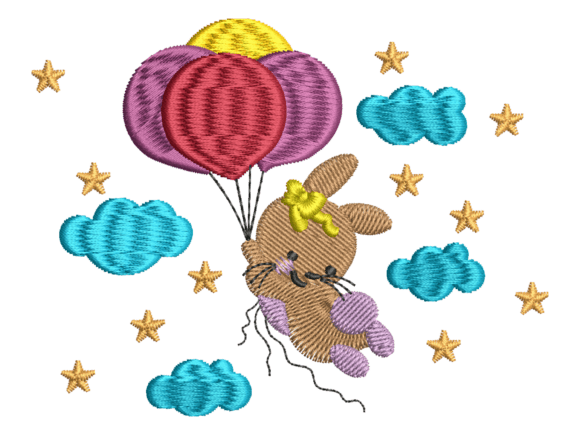
As an embroidery designer who’s prepped over 200 craft fair booths, I’ll say it straight: Teddy Bear with Balloons Embroidery lands with gentle charm—not loud, not ironic, but warmly nostalgic. It reads as soft, cheerful, and family-friendly, hitting that sweet spot between modern minimalism and classic handmade appeal. It’s not rustic or farmhouse, nor is it sleek or corporate. It’s festive without being holiday-specific, cute without tipping into cloying, and decorative without sacrificing clarity. That balance makes it unusually versatile for handmade markets—where shoppers scan tables in under three seconds.
Where This Design Shines on Craft Fair Products
I tested Teddy Bear with Balloons Embroidery across seven real-world items I regularly produce for weekend fairs: tote bags, aprons, tea towels, embroidered patches, fabric pouches, pillow covers, and market bags. Here’s what stood out:
- Tote bag design: At 4–5 inches wide, it anchors the front pocket beautifully—large enough to read from six feet away, small enough to avoid overwhelming the canvas. Customers consistently paused at my booth when this was stitched on natural linen totes.
- Apron embroidery: Centered above the pocket (or subtly on the bib), it adds personality without competing with functional details. Works especially well on light- to mid-weight cotton—no puckering, no thread nesting.
- Tea towel embroidery: On flour-sack or waffle-weave towels, the balloons’ curves translate cleanly—even with slight fabric texture. Just avoid ultra-thick terry; stitch density can struggle there.
- Embroidered patch: A standout. When turned into a sew-on or iron-on patch, Teddy Bear with Balloons Embroidery becomes a bestseller for kids’ backpacks, denim jackets, and baby blankets. Its clean outlines hold up beautifully at 2.5–3 inches.
- Fabric pouch & pillow cover: Ideal as a focal motif—centered or corner-placed. The rounded bear shape plays well with curved seams and piping, adding handmade warmth to otherwise simple silhouettes.
What Makes It Sell Well—Beyond Cuteness
It’s not just adorable—it’s strategically legible. From a distance, the balloon strings read as clean lines; the bear’s face has enough contrast and spacing to register instantly. That matters when your craft fair table is packed and lighting is uneven. Unlike overly detailed animal motifs, this design doesn’t rely on tiny eyes or fine whiskers—so it photographs crisply for Etsy listings and printable mockups. And because it avoids script fonts or dense fill areas, it’s highly repeatable for batch production. You can run 20 identical tote bags without re-hooping mid-day.
Careful-Use Notes Every Designer Should Check
Even charming designs have limits—and skipping these checks costs time and materials:
- Dense stitch areas: Balloon fills are likely moderate, but verify stitch density before scaling down below 2 inches—tiny balloons may blur on textured towels or dark fabric.
- Curved cap surfaces: Not ideal for baseball caps unless you confirm the file includes underlay and pull compensation. Stick to flat panels like snapbacks or bucket hats for reliable results.
- Dark fabric: Thread colors matter more here. If your digital embroidery file doesn’t specify recommended thread colors, test contrast first—pastel balloons vanish on navy or charcoal.
- Small lettering: This design has none—big win. No risk of illegibility or digitizing artifacts.
- Hoop size & stabilizer: Always check the included hoop size recommendation. For tea towels and lightweight pouches, a medium cutaway stabilizer prevents shadowing; for structured totes, try tear-away + light cutaway blend.
How It Elevates Your Handmade Product & Booth Presence
Teddy Bear with Balloons Embroidery quietly lifts perceived value. It reads as intentional—not generic clip art. When stitched on a linen apron beside hand-printed botanicals, it reinforces brand consistency without matching exactly. On a shelf of plain pillow covers, it draws attention without shouting. And for Etsy sellers? It’s a strong visual anchor for thumbnails—soft color palettes pop against white backgrounds, and its balanced composition scales well across mobile and desktop views.
Most importantly, it invites engagement. Parents point it out to toddlers. Grandmothers smile and ask, “Is that for a birthday?” That micro-moment of connection is gold at a craft fair—and it happens because the design feels personal, not mass-produced.
Pro Tips Before You Stitch Your First Batch
Before committing to 50 tote bags or uploading to your digital shop:
- Test the embroidery file on scrap fabric matching your final product—same weight, same weave, same dye lot if possible.
- Compare thread colors across three fabric bases: light, medium, and dark. Adjust bobbin tension if top thread dominates on thick textiles.
- Review spacing between bear and balloons—tight gaps may collapse on stretchy or loosely woven fabrics.
- Create at least one real mockup (not just a digital preview) under fair-like lighting. Does it hold up next to your other bestsellers?
- Confirm commercial licensing terms. Since this is a digital embroidery file delivered via ZIP or RAR, review the seller’s policy—especially if you plan to sell finished products commercially.
- Double-check file formats supported by your machine. Some Animals category files include .dst, .pes, and .jef—but never assume.
Final Thought: A Quiet Workhorse for Creative Entrepreneurs
Teddy Bear with Balloons Embroidery won’t trend on TikTok overnight—but it will sell steadily at every craft fair, fill Etsy carts alongside handmade soap and ceramic mugs, and earn repeat orders from boutique makers who value reliability over flash. It’s the kind of embroidery file that supports your business quietly: easy to produce, safe to scale, and genuinely loved by customers who buy handmade for feeling—not just function. In a saturated market, that kind of trust is worth more than any single viral moment.