Honey Bee Redwork Embroidery File
A Clean, Cheerful Buzz—Not Just Another Bug Design
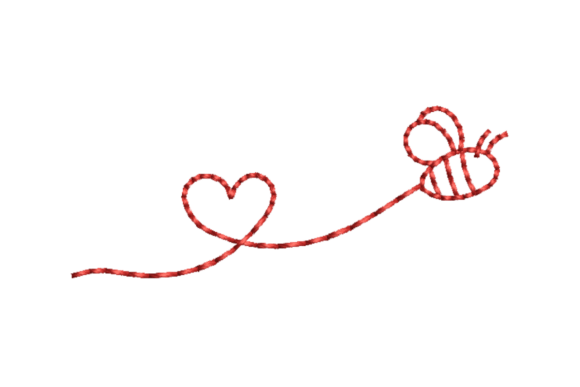
When I opened the Honey Bee Redwork Embroidery File for the first time, what struck me wasn’t just its simplicity—but its intentionality. This isn’t a fussy, over-digitized bee with layered wings and 3D shading. It’s a confident, single-outline redwork style: clean curves, open negative space, and a gentle nod to vintage charm without leaning into kitsch. The shape reads instantly—a friendly, slightly rounded bee in mid-flight, wings lifted, antennae poised. It feels handmade, not machine-made, even though it’s a digital embroidery file. That’s rare. And valuable.
Real-Life Test: A Linen Tea Towel for a Local Bakery’s Gift Set
Last week, I used the Honey Bee Redwork Embroidery File on a batch of heavyweight linen tea towels for a small-batch bakery’s holiday gift set. They needed something warm, approachable, and subtly thematic—not cutesy, not corporate. The bee stitched cleanly at 3.2" wide on a 4x4 hoop, with no stitch pile-up or thread breaks. Because it’s redwork, the design relies mostly on running stitch and light satin stitch accents (like the wing veins), so stitch density stays low. That meant less stabilizer bulk, faster hooping, and zero puckering on the textured linen. Customers loved how the bee “sat” on the fabric—not floating, not sinking—just quietly present. One even asked if it was hand-embroidered. That’s the kind of impression this file earns.
Where It Shines—and Where It Needs Thought
The Honey Bee Redwork Embroidery File excels on stable, medium-weight fabrics: cotton twill aprons, canvas tote bags, brushed cotton sweatshirts, and quilting-weight pillow covers. Its minimal thread use makes it ideal for custom apparel where durability matters—especially baby embroidery, where softness and washability are non-negotiable. As a tote bag design or sweatshirt embroidery motif, it adds personality without overwhelming the garment.
But it’s not universally forgiving. On stretchy knits like t-shirts or curved surfaces like caps, you’ll need extra care: a cutaway stabilizer, reduced top tension, and possibly a slight size adjustment to preserve legibility. Thin fabrics (like voile or lightweight chambray) may show backing through the open areas—so test with your preferred stabilizer combo first. And while it works beautifully on dark fabric with high-contrast thread (think navy + cream), avoid pairing it with overly busy prints underneath—the bee needs breathing room to land visually.
What This Design Says About Your Finished Product
Using the Honey Bee Redwork Embroidery File quietly elevates your handmade product. It doesn’t scream “look at me”—it invites closer inspection. That builds trust. Customers who buy embroidered kitchen towels or personalized gifts don’t just want decoration; they want evidence of care, craft, and cohesion. This file delivers that. It supports brand consistency for small shop owners: imagine it stitched on matching aprons and tea towels for a cottage-core Etsy shop, or as a subtle logo alternative on nursery decor. Its redwork roots give it heirloom warmth—ideal for holiday embroidery or wedding gifts where sentiment outweighs flash.
It also performs well in digital spaces. As a digital embroidery file, it renders clearly in printable mockups and preview thumbnails—no muddy edges, no lost detail. That boosts buyer engagement for digital product sellers, especially when paired with clean, neutral background options in listings.
Designer Notes You Can’t Skip
- Always test first. Run the Honey Bee Redwork Embroidery File on scrap fabric that matches your final project’s weight, weave, and stretch—even if it’s “just a towel.”
- Thread colors matter more than usual. Redwork traditionally uses red thread, but this file sings in mustard, charcoal, sage, or off-white too. Try it in black on cream linen—it’s unexpectedly modern.
- Check stitch density before scaling. While the file stitches quickly as advertised, enlarging beyond 4" may compress delicate wing lines. If you need larger, confirm the digitizing holds up—or ask your digitizer to optimize.
- Hoop size is practical, not arbitrary. It fits comfortably in a 4x4 hoop, but verify your machine’s actual stitching area—some hoops have tight margins that clip wingtips.
- Inspect corners and curves. Zoom in on the antennae tips and wing ends in your embroidery software. Are they sharp? Rounded? Does the running stitch flow smoothly? This tells you how forgiving it’ll be on textured fabric.
- Mock it both ways. Preview the Honey Bee Redwork Embroidery File in black-and-white and full color. Does it retain character in grayscale? That’s essential for branding flexibility.
- Stabilizer choice changes everything. For home decor, tear-away works fine. For baby embroidery or frequent-wash items, switch to lightweight cutaway—especially under satin-stitched wing veins.
- Licensing isn’t implied. Since this is a commercial embroidery file, double-check usage rights before selling finished products or bundling it into design assets for other makers.
Final Thought: Less Is Truly More Here
The Honey Bee Redwork Embroidery File doesn’t try to do everything—and that’s its strength. It’s not an applique design begging for fabric scraps, nor a fill-stitch beast demanding heavy stabilizer. It’s a focused, thoughtful machine embroidery design built for real work: stitching reliably, reading clearly, and adding quiet charm to everyday objects. Whether you’re an Etsy seller building a cohesive collection, a craft business owner refreshing seasonal merchandise, or a designer curating embroidery project kits, this file earns its place—not because it’s trendy, but because it’s trustworthy. It reminds us that sometimes, the most effective embroidery isn’t the most complex. It’s the one that lands softly, stays legible, and makes people smile without explanation.