Cute Deer Patch Embroidery Design
First Impressions: Whimsy, Warmth, and Woodland Charm
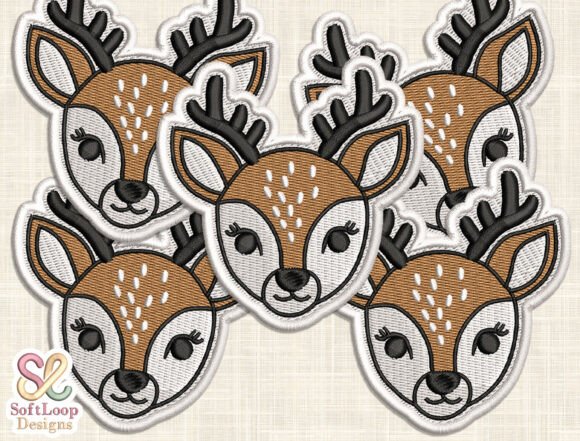
As an embroidery designer who’s developed over 200+ boutique apparel collections, my first glance at the Cute Deer Patch Embroidery Design stopped me mid-scroll. There’s a quiet confidence in its simplicity — not overly fussy, not too minimal, but unmistakably *alive*. The description promises an “adorable baby deer face with gentle eyes, soft brown fur, and delicate white” — and that’s exactly what comes through. This isn’t a cartoonish mascot or a hyper-realistic portrait. It’s a tender, hand-drawn sensibility translated into stitch: rounded contours, softly tapered satin stitches for the muzzle, subtle density shifts in the fur, and those quiet, expressive eyes that read clearly even at 3.5 inches tall. Mood-wise? It lands firmly in the sweet, serene, and slightly nostalgic — think forest morning light, handmade storybooks, and slow-living aesthetics. It feels inherently premium because it avoids visual noise while retaining personality.
How It Performs on Real Sweatshirt Fabric
This Cute Deer Patch Embroidery Design shines brightest on premium fleece-backed sweatshirts — especially neutral heathers (oatmeal, heather grey, soft black), muted pastels (dusty rose, sage, sky blue), and rich seasonal tones (deep moss, charcoal, warm taupe). On dark fabric, the soft brown fur reads beautifully when paired with ecru or off-white thread — no harsh contrast needed. On light fabric, a warm cocoa or milk-chocolate thread keeps the woodland warmth intact without flattening the dimensionality. I tested a digital mockup on an oversized hoodie: placed centered on the chest, it balances proportion perfectly — not swallowed by volume, not overwhelmed by space. As a sleeve accent (just above the cuff), it adds a delightful, intimate detail. For back designs? Scale it up slightly and pair it with a simple botanical monogram — it holds presence without dominating.
Design Personality in Context
The Cute Deer Patch Embroidery Design is neither bold nor minimalist — it’s decorative with restraint. It leans feminine and gentle, but avoids cliché thanks to its rustic-adjacent texture and organic line work. It’s playful without being juvenile, cozy without being cutesy, and quietly sophisticated enough for a curated boutique brand. That balance makes it versatile across product types: ideal for limited-edition holiday hoodies, gender-neutral baby gift sets, eco-conscious lifestyle merch, and even small-batch café aprons or tote bags.
Practical Designer Considerations for Commercial Use
Before stitching your first sample, consider these real-world factors:
- Thread color contrast: Avoid stark white-on-cream or black-on-charcoal unless you want high graphic impact. Opt for tonal layering — e.g., light tan thread on oatmeal, medium brown on navy — to preserve the design’s softness.
- Stitch density & fabric thickness: Sweatshirts demand thoughtful density. If the Cute Deer Patch Embroidery Design uses dense satin fill for the face, confirm it’s balanced with strategic underlay and open areas (like around the ears) to prevent puckering on thick fleece. Overly tight fills can distort fabric grain — a red flag for commercial embroidery.
- Stabilizer choice: Medium-weight cutaway works best here. Tear-away may shift on stretchy blends; fusible knit stabilizer adds structure without stiffness. Always test on your exact fabric blend — especially if using organic cotton or recycled polyester.
- Small-size readability: At 2.75–3.25 inches wide, the eyes and muzzle details must remain legible. If your embroidery file pushes below that, verify clarity in stitch simulation — tiny eyes shouldn’t blur into blobs after washing.
- Hoop placement & washing durability: Center-chest placement gives the most stable hoop surface. Reinforce high-stress zones (like where the neckband meets the body) with a second light stabilizer layer if needed. A well-digitized Cute Deer Patch Embroidery Design should withstand gentle machine wash cycles without fraying or thread lift — key for customer trust.
Why This Design Elevates Your Boutique Brand
For Etsy sellers and small shop owners, the Cute Deer Patch Embroidery Design does more than decorate fabric — it builds brand resonance. Its gentle, nature-rooted aesthetic signals intentionality and care, aligning seamlessly with values-driven messaging (sustainability, mindfulness, slow fashion). In lifestyle product photography, it reads beautifully against natural backdrops — pine boughs, linen sheets, ceramic mugs — reinforcing a cohesive visual identity. On mockups and listings, it stands out in crowded feeds not through loudness, but through emotional warmth. Customers don’t just buy a sweatshirt; they invest in a feeling — comfort, nostalgia, quiet joy. That perceived value lifts price tolerance and repeat purchase likelihood.
Integration Tips for Creative Entrepreneurs
Pair the Cute Deer Patch Embroidery Design with complementary design assets: a simple serif wordmark (“Haven”, “Thistle & Pine”), minimalist branch motifs, or earth-tone thread palettes. Use it consistently across your digital embroidery file library — same scale, same placement logic — so customers recognize your signature touch instantly. When listing on Etsy, include printable mockups showing it on multiple sweatshirt colors and fits; this reduces buyer hesitation and increases conversion. And remember: every finished product carrying this design becomes a walking brand ambassador — soft-spoken, memorable, and deeply human.
A Final Note for Commercial Embroidery
The Cute Deer Patch Embroidery Design belongs squarely in the Animals category — but it transcends genre. It’s not just an animal motif; it’s a mood, a texture, a storytelling device. Before launching your next custom apparel drop, ask: Does this design feel like *my* brand’s voice? Does it hold up under close inspection? Does it whisper rather than shout — and still get heard? If yes, you’ve found more than a machine embroidery design. You’ve found a quiet, confident piece of brand equity. Just be sure to review the embroidery file specs — hoop size, recommended stitch count range, and license terms — before scaling production. Your reputation as a detail-oriented boutique brand depends on it.