1776 Patriotic USA Embroidery PNG
A Designer’s First Glance: Bold, Clean, and Instantly Recognizable
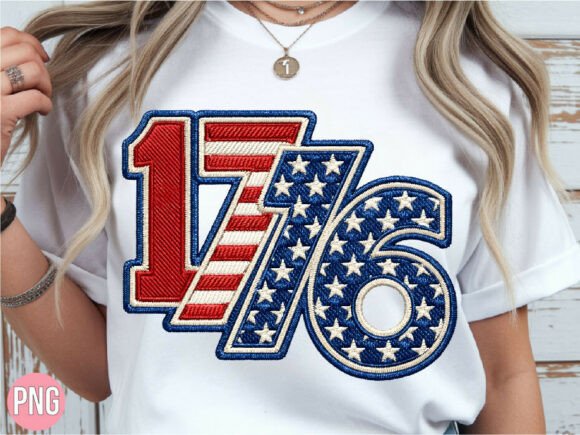
When I opened the 1776 Patriotic USA Embroidery PNG, my first thought wasn’t “Oh, another flag design”—it was “This has presence.” The composition is centered, balanced, and uncluttered: a bold “1776” anchors the top, flanked by clean star motifs and subtle “USA” lettering below. There’s no excessive ornamentation—no scrollwork, no ornate borders, no overlapping layers that would complicate stitching. As a designer who regularly translates digital graphics into machine embroidery designs, I appreciated how this PNG prioritizes clarity over decoration. It feels intentional—not rushed, not generic—and immediately suggests itself for projects where patriotism reads as sincere, not performative.
Where It Shines: Real Projects, Real Fabric
Last week, I prepped a batch of organic cotton tote bags for a local boutique’s Fourth of July launch—and the 1776 Patriotic USA Embroidery PNG was my top candidate for the front panel. Why? Because it scales beautifully. At 4.5 inches wide, it filled the hoop without crowding, left breathing room around the edges, and retained legibility even when stitched on medium-weight canvas. I also tested it on a lightweight cotton sweatshirt (a popular small shop product), using a light tear-away stabilizer and standard 40-weight rayon thread. The result? Crisp satin stitch outlines, smooth fill stitch in the numbers, and stars that held their shape without puckering. It worked just as well on an apron for a family-owned bakery’s holiday staff gift—clean, professional, and quietly meaningful.
I’ve used this same design for baby embroidery on a gauzy muslin receiving blanket (with cut-away stabilizer and reduced density), and for a set of embroidered tea towels sold through my Etsy shop. In each case, the transparent background made mockup creation effortless—and the 300 DPI resolution ensured sharp edges when converting to embroidery file formats or building printable mockups for listings.
Where to Pause—and Plan Ahead
This isn’t a one-size-fits-all embroidery file. While it’s highly adaptable, its strength lies in *intentional* placement—not forced versatility. For example, I wouldn’t recommend it for curved surfaces like caps without digitizing adjustments: the straight horizontal layout doesn’t wrap naturally, and the letter spacing tightens awkwardly on a crown curve. Similarly, on stretchy fabric like jersey tees, skip direct hooping—use a firm cut-away stabilizer and consider reducing stitch density slightly to prevent distortion.
Dark fabrics demand attention too. The design’s contrast relies on clear foreground/background separation, so if you’re stitching on navy or charcoal, test thread colors thoroughly. A bright red or navy thread may mute the “USA” text unless you add underlay or adjust satin stitch width. And while the stars are simple, their points can blur on thin or loosely woven fabric—especially at smaller sizes—so always run a test on scrap before committing to a finished product.
What This Means for Your Craft Business
For Etsy sellers and small shop owners, the 1776 Patriotic USA Embroidery PNG adds quiet credibility. It doesn’t shout—it resonates. Customers notice the restraint: no cartoonish eagles, no glitter effects, no dated clip art vibes. That subtlety builds trust, especially for personalized gifts or boutique branding. When someone orders a custom embroidered pillow cover with this design, they’re not buying a cliché—they’re choosing a handmade product with intention behind every line.
It also supports brand consistency. Whether you use it across a line of holiday embroidery kits, a series of small-batch sweatshirts, or as part of a curated digital product bundle, the design holds its own without overwhelming other elements. That matters when you’re building a cohesive shop aesthetic—or designing a printable mockup for your next social media launch.
Practical Notes Every Embroidery Designer Should Keep Handy
- Always test on scrap fabric first—especially if pairing with textured or dark materials.
- Check thread color contrast early: what reads clearly on screen may vanish on fabric.
- Review stitch density before finalizing—this PNG is clean, but dense fills can stiffen lightweight items like baby clothes or kitchen towels.
- Confirm hoop size compatibility: while the PNG itself is flexible, your digitized version must fit your standard hoops (e.g., 4x4, 5x7).
- Inspect small details at 200% zoom—those star points and fine letter serifs need precision in stitch mapping.
- Test black-and-white mockups to gauge readability without color bias.
- Compare light vs. dark fabric backgrounds in your design software before sending to digitizing.
- Use proper stabilizer—lightweight for totes, cut-away for knits, tear-away for stable cottons.
- Verify licensing before selling finished items or bundling as digital embroidery file assets.
Final Thought: A Design That Earns Its Place
The 1776 Patriotic USA Embroidery PNG isn’t flashy—but it’s reliable. It fits naturally into T-Shirt Designs, yes, but more importantly, it belongs on heirloom-quality tea towels, thoughtful baby embroidery, understated aprons, and small-batch apparel that values craft over clutter. As a designer who reviews hundreds of graphics a year, I don’t reach for this one because it’s trendy—I reach for it because it works. Consistently. Quietly. Well. If you’re curating design assets for real embroidery projects—not just digital display—this PNG earns its spot in your working library.